On the evening of September 7, 2026, at Xiaomi’s autumn flagship new product launch event held in Beijing, Lei Jun, founder, chairman, and CEO of Xiaomi Group, officially announced the market launch of the Xiaomi Pengcheng N90. As the flagship large extended-range SUV of the Xiaomi Pengcheng family, the N90 is offered in two variants: the N90 Max and the N90 Max Explorer Edition, priced at US$40,225 and US$44,695.
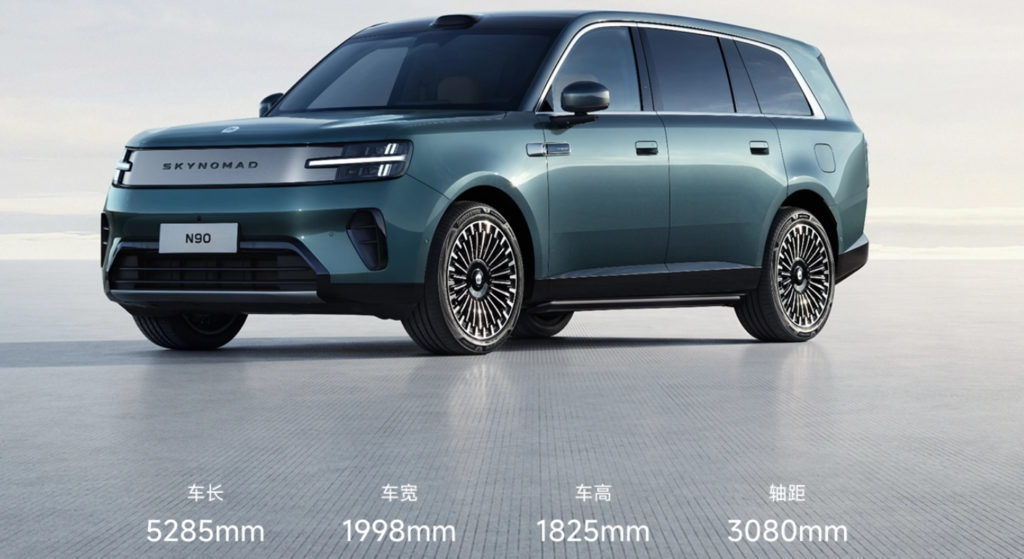
This pricing represents a significant downward adjustment from the previous pre-sale price of RMB 299,900 and directly places the vehicle in the core price territory of mainstream large extended-range SUVs such as the Li Auto L8 and the AITO M7.In terms of technical specifications, the Xiaomi Pengcheng N90 is built on the Kunlun architecture, with exterior dimensions of 5,285 mm in length, 1,998 mm in width, and a height of 1,825 mm for the standard version, while the Explorer Edition increases to 1,925 mm due to the inclusion of an integrated pop-up roof tent. The wheelbase measures 3,080 mm. As an extended-range electric vehicle, the N90 is powered by a 1.5L turbocharged engine supplied by Dong’an Power as the range extender, with a maximum output of 112 kW, paired with a dual-motor all-wheel-drive system consisting of front and rear electric motors delivering a combined output of 310 kW (210 kW front motor, 100 kW rear motor). The vehicle achieves 0–100 km/h acceleration in 5.9 seconds and a top speed of 190 km/h. The entire lineup is equipped with a 76 kWh ternary lithium battery pack (supplied by CALB, utilizing Xiaomi’s Longjia battery technology), delivering a CLTC pure-electric range of 464 km and a maximum CLTC combined range of up to 1,705 km. The WLTC fuel consumption in depleted battery mode is 6.26 liters per 100 kilometers, and the vehicle is compatible with 92-octane gasoline. For charging, the N90 adopts a 400-volt electrical architecture, with a 20%–80% fast-charging time of 18 minutes, and the company claims 15 minutes of charging can add 285 kilometers of range.
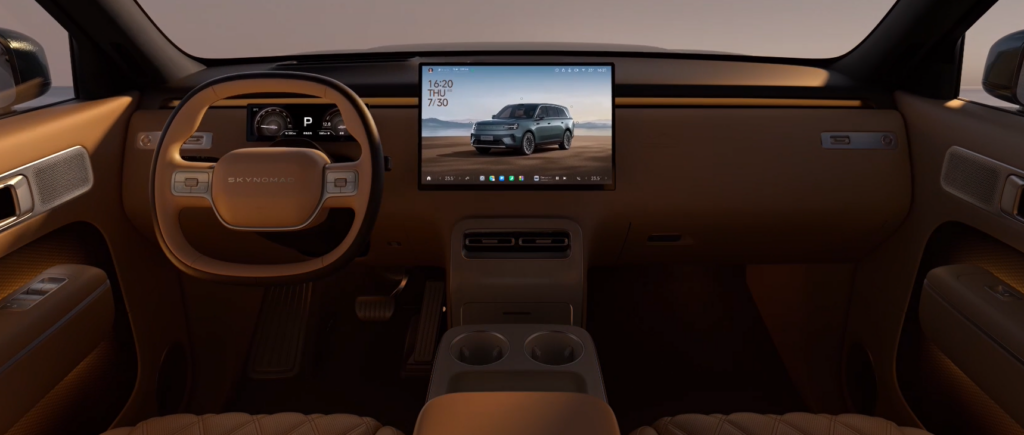
The cockpit and intelligent features represent a significant strength of the N90. Both variants come standard with LiDAR, 11 cameras, one millimeter-wave radar, and 14 ultrasonic sensors, powered by the NVIDIA Thor chip delivering 700 TOPS of computing power, supporting Xiaomi’s fully in-house developed HAD assisted driving system, which covers both highway and urban navigation-assisted driving functions, with lifetime free usage. Inside the cabin, the N90 is equipped with the Qualcomm Snapdragon 8 Gen 3 cockpit chip and the Surge smart cockpit system, featuring a 16.1-inch floating central control screen and an 8.88-inch full-LCD instrument cluster. On the high-end front, the N90 Max comes standard with second-row dual zero-gravity seats (valued at RMB 18,000), third-row electric adjustment with heating function, a 9-liter independent compressor refrigerator, and a 21.4-inch rear-seat entertainment screen. On the safety front, the N90 adopts a cage-style steel-aluminum hybrid body structure, with high-strength steel and aluminum alloys accounting for 90.4% of the body composition, equipped with 12 airbags, and supports high-speed blowout stability control at up to 160 km/h.
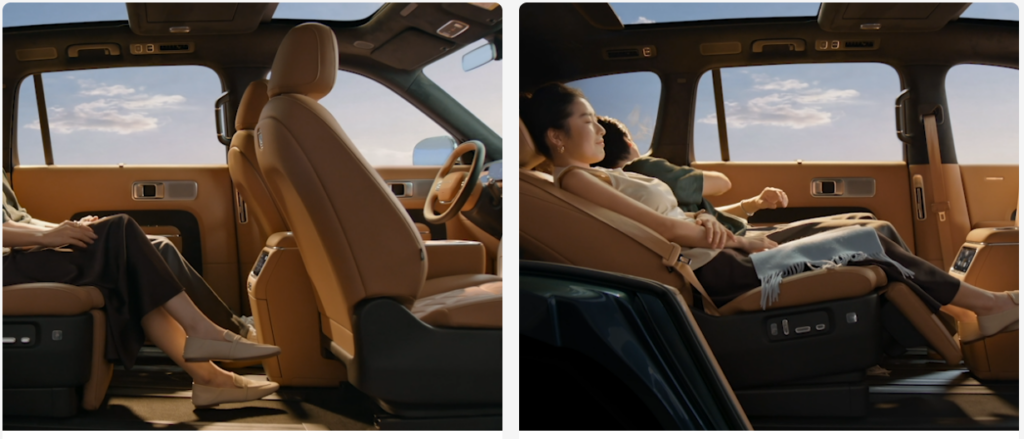
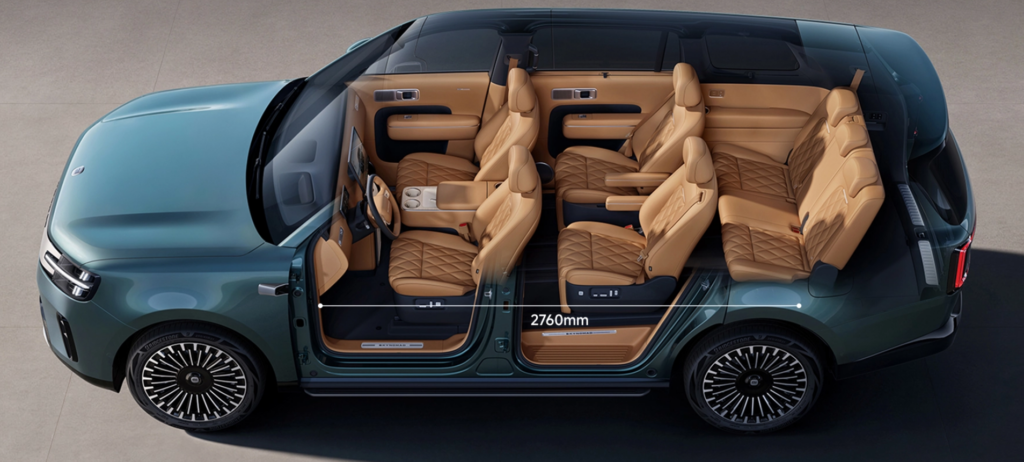
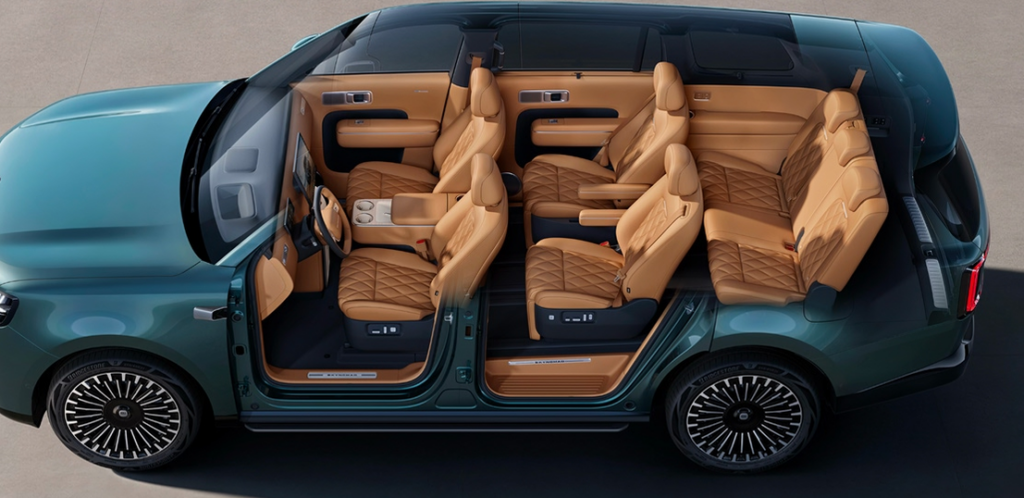
Spatial design is the core differentiating feature of the N90. The N90 Max adopts a 2+2+3 seven-seat layout, featuring six extra-long sliding rails throughout the cabin. The front seats support 180-degree rotation, enabling various spatial configurations such as face-to-face meeting mode and office mode, with four zero-gravity seats available across the vehicle. The standard trunk capacity is 577 liters, expandable to 1,831 liters with the third row folded flat. The Explorer Edition, by contrast, removes the third row in favor of a large five-seat layout, equipped with an integrated electric pop-up roof tent. With the roof deployed, the interior headroom reaches up to 2.294 meters, creating a separate second-level living space, complete with air conditioning vents, charging ports, and ambient lighting. The rear seats support one-touch bed conversion, a radiant floor heating system is concealed beneath the floor, and trunk capacity reaches 1,553 liters, positioning the vehicle as a “mobile one-bedroom” tailored for camping lifestyle scenarios.
In summary, the Xiaomi Pengcheng N90 demonstrates strong competitiveness in terms of pricing strategy, combined range, intelligent hardware configuration, and spatial flexibility, with the Explorer Edition in particular filling a niche gap in the market as a factory-equipped recreational vehicle. However, the vehicle also presents several notable shortcomings that warrant consideration. First, the entire series adopts a 400-volt electrical architecture, which, in the 2026 new-energy vehicle market, represents a generational gap in charging efficiency compared to competitors that have already popularized 800-volt or even 900-volt high-voltage platforms, potentially resulting in longer charging times during long-distance travel. Second, the positioning of the N90 Max and the Explorer Edition differs substantially—the former is geared toward multi-child families and three-generation travel scenarios, while the latter is specifically designed for camping enthusiasts and long-distance self-driving users, requiring consumers to make clear trade-offs based on their individual usage needs. Additionally, the Explorer Edition removes the third-row seats, sacrificing seven-seat passenger capacity in exchange for camping functionality, which may not be the optimal choice for families with frequent multi-passenger travel requirements. In terms of interior detailing, certain reviews have pointed out that the beige interior upholstery is prone to soiling and that hard plastics are used in some areas. Overall, the Xiaomi Pengcheng N90, with its highly competitive pricing, flagship-class dimensions, and distinctive product differentiation strategy, has successfully entered the mainstream large extended-range SUV segment. Nevertheless, its trade-offs in charging technology, variant selection, and interior detailing will remain critical factors that consumers need to weigh against their individual usage scenarios. Official data shows that the N90/N70 series achieved over 10,000 locked orders within four minutes of launch, with delivery lead times estimated at approximately 1 to 5 weeks.
发表回复