On the evening of September 7, 2026, at Xiaomi’s autumn flagship new product launch event held in Beijing, Lei Jun, founder, chairman, and CEO of Xiaomi Group, officially announced the market launch of the Xiaomi Pengcheng N70, the first model under Xiaomi Auto’s new extended-range electric vehicle (EREV) series, “Xiaomi Pengcheng” (SkyNomad).
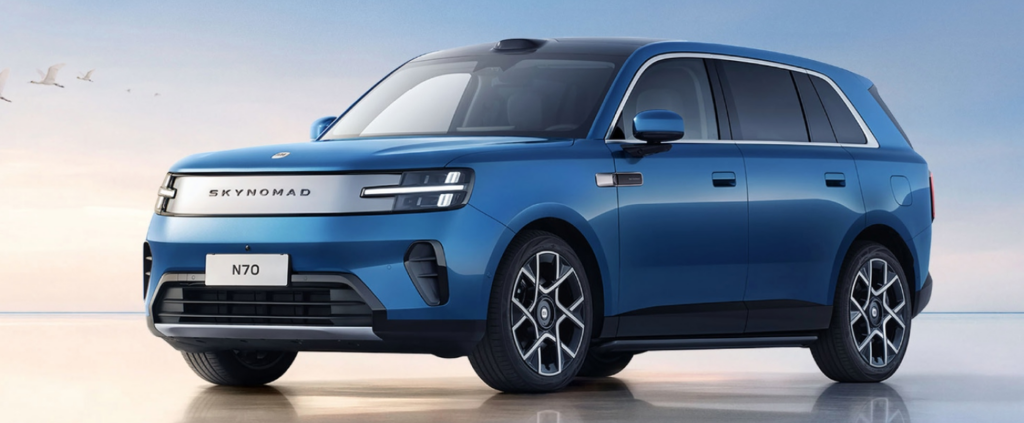
Positioned as a mid-to-large five-seat extended-range SUV, the N70 is offered in two variants: the N70 Pro and the N70 Max, priced at RMB 209,900 and RMB 239,900 respectively, equivalent to approximately US$31,275 and US$35,745. This pricing represents a significant downward adjustment from previous market expectations and directly places the vehicle in the core price territory of mainstream extended-range SUVs such as the Li Auto L6 and the AITO M7.
In terms of technical specifications, the Xiaomi Pengcheng N70 is built on the Kunlun architecture, with exterior dimensions of 4,960 mm in length, 1,998 mm in width, and 1,765 mm in height, and a wheelbase of 2,950 mm. As an extended-range electric vehicle, the N70 is powered by a 1.5T range extender engine and offers two powertrain configurations. The entry-level N70 Pro adopts a single-motor front-wheel-drive layout with a peak output of 210 kW, achieving 0–100 km/h acceleration in 7.9 seconds. It is paired with a 52 kWh lithium iron phosphate battery, delivering a CLTC pure-electric range of 351 km and a combined range of 1,351 km. The high-end N70 Max upgrades to a dual-motor all-wheel-drive system with a combined output of 310 kW, reducing the 0–100 km/h sprint to 5.5 seconds. It is equipped with a 76 kWh ternary lithium battery, offering a CLTC pure-electric range of 505 km and a combined range of 1,461 km. For charging, the entire N70 series adopts a 400-volt electrical architecture, with an official 20%–80% fast-charging time of 18 minutes. On the chassis front, the N70 Pro comes standard with a front double-wishbone and rear multi-link independent suspension, while the N70 Max further adds air suspension and continuous damping control (CDC) shock absorbers. The vehicle’s minimum turning radius is 5.67 meters.
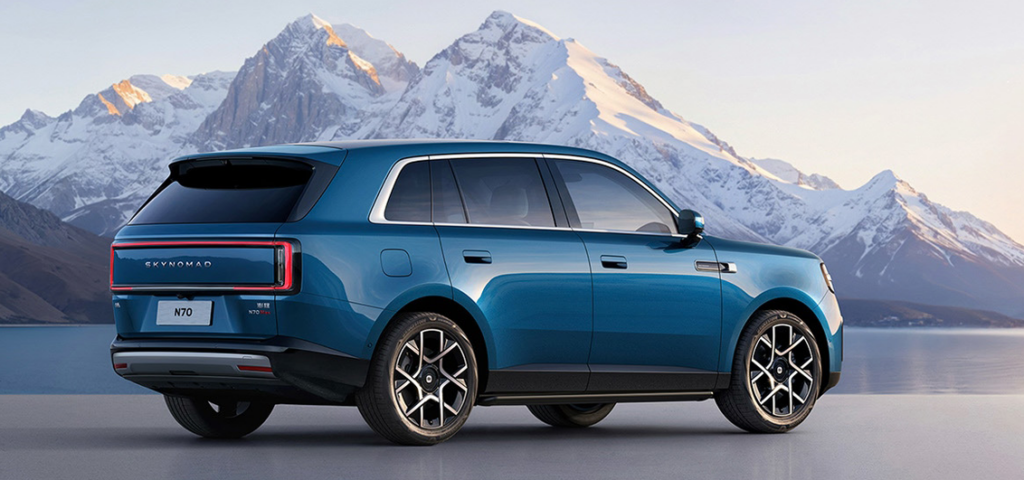
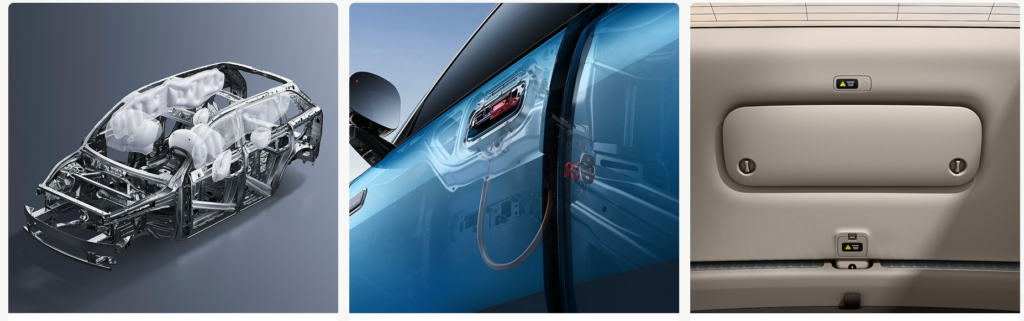
Intelligent features represent a standout strength of the Xiaomi Pengcheng N70. Both variants come standard with LiDAR, 4D millimeter-wave radar, and the NVIDIA Thor-U chip, delivering 700 TOPS of computing power, and support Xiaomi’s fully in-house developed HAD assisted driving system, which covers both highway and urban navigation-assisted driving functions. Inside the cabin, the N70 is equipped with the Qualcomm Snapdragon 8 Gen 3 cockpit chip and the Surge smart cockpit system, featuring a 16.1-inch 3K central control screen, an 8.8-inch digital instrument cluster, and a 20-inch head-up display. The high-end N70 Max further adds a 21.4-inch rear-seat entertainment screen, a 9-liter independent compressor refrigerator, and a 25-speaker Xiaomi Star String premium sound system. On the safety front, the N70 adopts a cage-style steel-aluminum hybrid body structure, with high-strength steel and aluminum alloys accounting for 91.3% of the body composition. It incorporates 14 ultra-high-strength steel components rated at 2,200 MPa, an integrated roll cage, and a one-piece hot-formed door ring. The vehicle comes standard with nine airbags and supports high-speed blowout stability control at up to 160 km/h, as well as emergency buoyancy-assisted escape functionality.
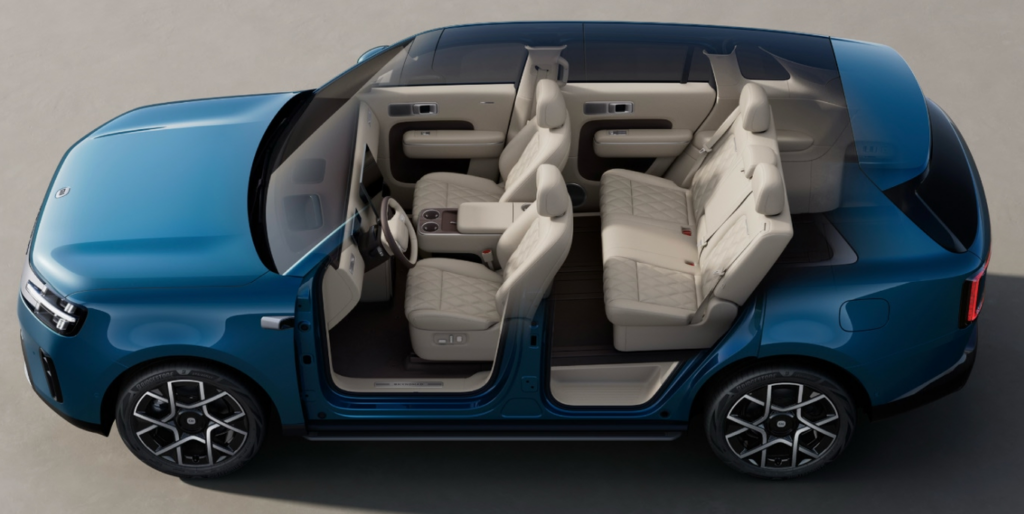
Spatial design is a core highlight of the N70. Through a flat floor and extra-long sliding rails, the vehicle achieves a highly flexible interior layout. The second-row seats offer a maximum legroom of 1,410 mm, while the standard trunk capacity is 1,203 liters, expandable to 2,425 liters with the second row folded flat. The front seats support 180-degree rotation, enabling a face-to-face seating arrangement with the rear passengers.
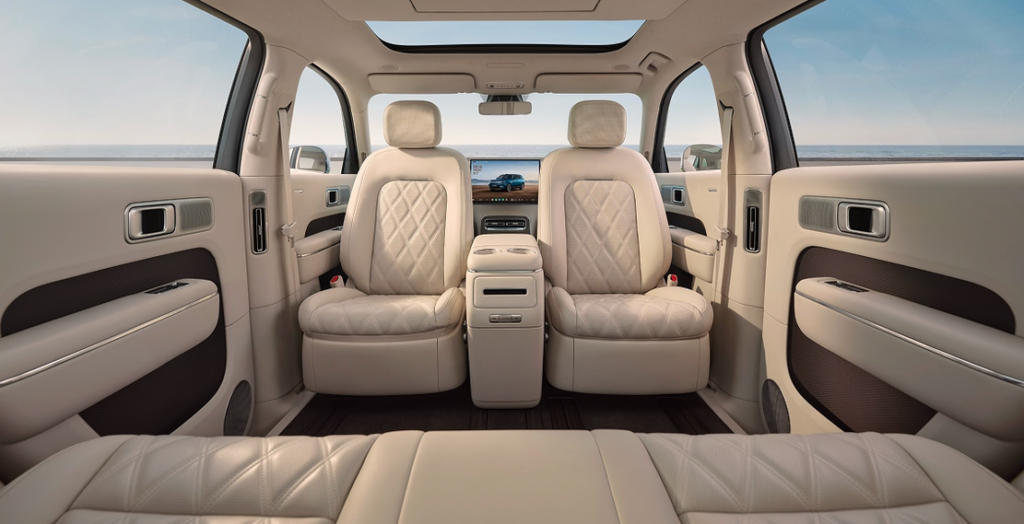
In summary, the Xiaomi Pengcheng N70 demonstrates strong competitiveness in terms of pricing strategy, pure-electric range, intelligent hardware configuration, and spatial flexibility, with its pure-electric range standing at the forefront among extended-range models. However, the vehicle also presents several notable shortcomings that warrant consideration. First, the entire series adopts a 400-volt electrical architecture, which, in the 2026 new-energy vehicle market, represents a generational gap in charging efficiency compared to competitors that have already popularized 800-volt or even 900-volt high-voltage platforms, potentially resulting in longer charging times during long-distance travel. Second, the absence of rear-wheel steering across the lineup limits maneuverability in congested urban environments for a vehicle of nearly five meters in length. Additionally, the differences between the entry-level Pro and the high-end Max are substantial, encompassing battery chemistry, suspension system, audio setup, and rear entertainment features, with the entry-level variant exhibiting notable content reduction. In terms of interior detailing, certain reviews have pointed out that the beige interior upholstery is prone to soiling, that hard plastics are used in areas such as the trunk and overhead grab handles, that a 220-volt power outlet is absent from the cargo area, and that the rear seats do not fold completely flat. Overall, the Xiaomi Pengcheng N70, with its highly competitive pricing and distinctive product attributes, has successfully entered the mainstream family-oriented extended-range SUV segment. Nevertheless, its trade-offs in charging technology, chassis configuration, and interior detailing will remain critical factors that consumers need to weigh against their individual usage scenarios.
发表回复