On September 3, 2026, the all-new FREELANDER Freelander 8, jointly developed by Chery and Jaguar Land Rover under a “Joint Venture 3.0” model, was officially launched globally. Positioned as a luxury-tech all-terrain SUV, the new model is available in both large five-seat and 2+2+2 six-seat configurations, with a total of six trim levels.
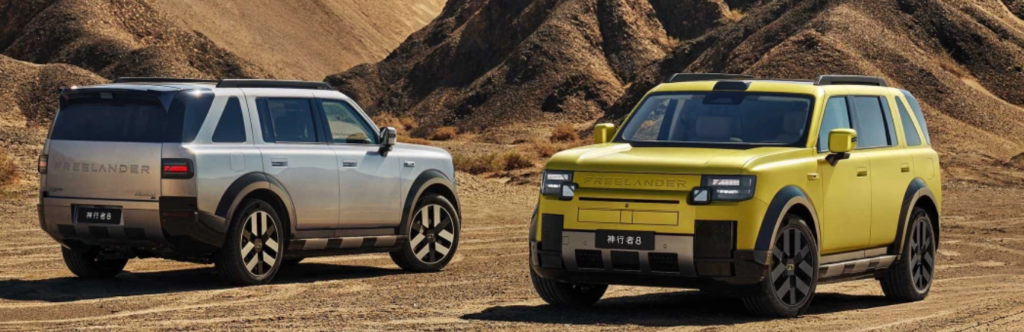
The official MSRP ranges from approximately $43,600 to $56,300, with limited-time promotional pricing from $40,800 to $53,500. As the first production model under the revitalized Freelander brand, the vehicle deeply integrates Jaguar Land Rover’s British luxury and all-terrain heritage with China’s cutting-edge advancements in new energy and intelligent technologies.
At the heart of the powertrain and electric propulsion system, the Freelander 8 demonstrates flagship-caliber performance. The entire lineup comes standard with an 800V high-voltage range-extender electric platform and a dual-motor all-wheel-drive system, delivering a combined system output of 610 kW and peak torque of 813 N·m, propelling the vehicle from 0 to 100 km/h in just 4.6 seconds. The battery is a 60.3 kWh Ningde Times (CATL) Xiaoyao range-extender all-terrain-specific ternary lithium unit, offering a CLTC-rated pure-electric range of 310 kilometers. In terms of charging efficiency, the vehicle supports 6C ultra-fast charging, enabling a 20% to 80% charge in as little as 12 minutes. The range extender itself is a 1.5L turbocharged four-cylinder engine equipped with active noise cancellation technology.
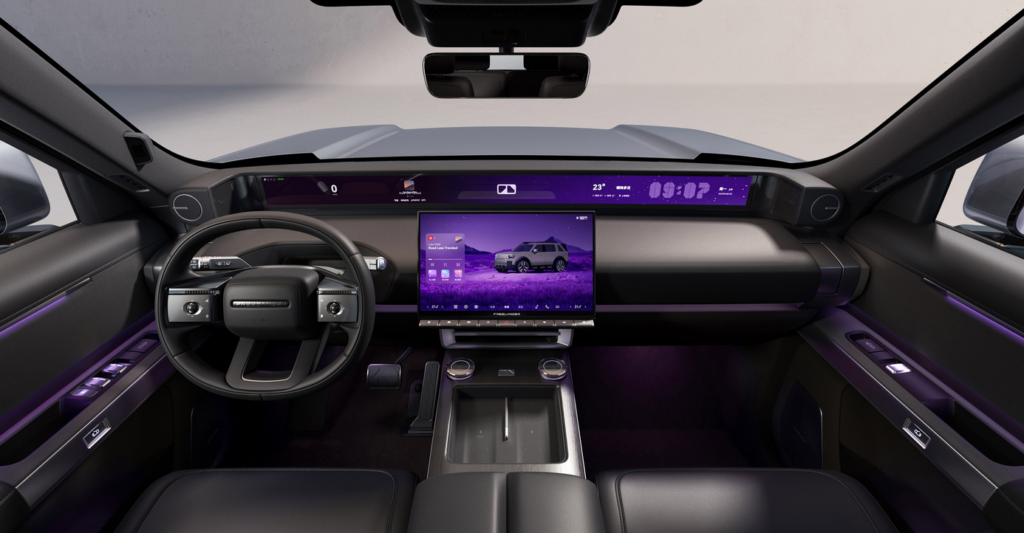
In terms of dimensions, the Freelander 8 measures 5,118 mm in length (or 5,185 mm with optional exterior accessories such as the spare tire carrier), 2,050 mm in width, and 1,898 mm in height, riding on a wheelbase of 3,040 mm. This substantial footprint, combined with the classic “boxy” castle-style body design, projects an imposing and rugged presence. The chassis and all-terrain configuration represent another major technological highlight. The vehicle comes standard with a closed-loop dual-chamber air suspension, CCD continuously variable damping shock absorbers, and a ±10° rear-wheel steering system, which reduces the turning radius of this mid-to-large SUV to just 5.15 meters. Coupled with the i-ATS intelligent all-terrain system and class-leading front, center, and rear differential locks, the Freelander 8 achieves a wading depth of up to 900 mm and a cross-axle capability of 800 mm.
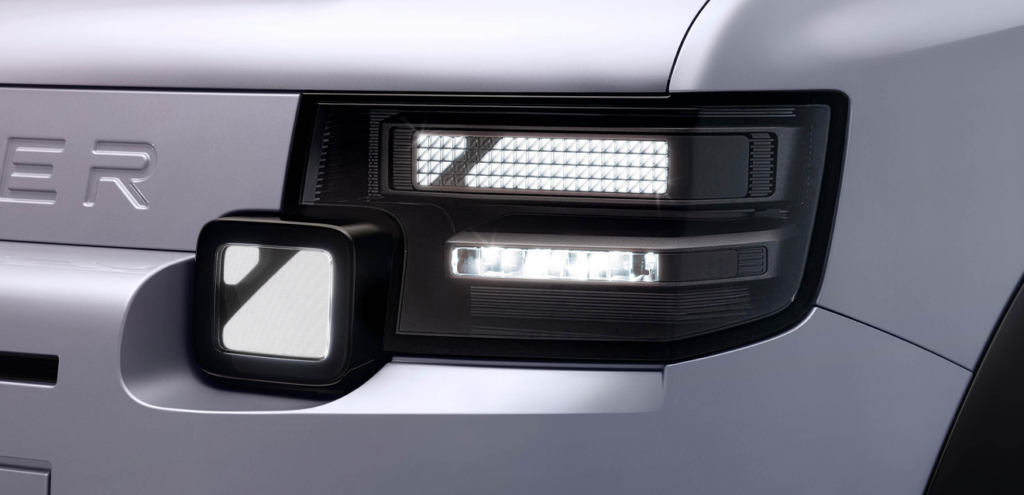
In the realm of intelligent technology, the Freelander 8 embodies a philosophy of “entry-level with over-specification.” It is the world’s first luxury new-energy vehicle to come standard with Huawei’s Qiankun ADS 5 autonomous driving system across all trims. The PRO and MAX trims are equipped with the enhanced version of the system, while the MAX+ and higher trims feature the ultimate version, incorporating an 896-line dual-optical-path LiDAR and a dToF rear solid-state LiDAR capable of detecting small obstacles as small as 14 centimeters from 120 meters away. The system supports urban NCA (Navigation Cruise Assist), highway NCA, and valet parking 3.0+, with an average unsupervised intervention distance exceeding 1,500 kilometers on highways. For the smart cockpit, the Freelander 8 is the world’s first to debut the Qualcomm Snapdragon 8397 automotive-grade chip, whose CPU and GPU computing power are three times that of the previous-generation flagship Snapdragon 8295, with NPU computing power increased twelvefold. The hardware includes a 46.3-inch Mini LED instrument panel and a 15.6-inch central control screen, both running the newly launched ENLIGHT OS·Freelander Intelligence system. Powered by an on-device full-modal large language model and a hippocampus-like memory module, the system supports multi-command recognition, contextual reasoning, and personalized services.
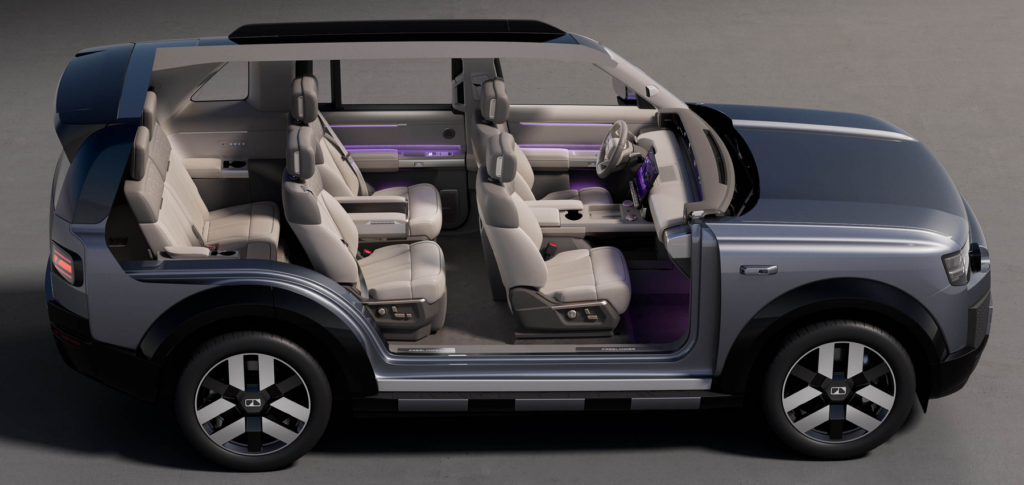
On the safety front, the Freelander 8 is developed under the S·H·I·E·L·D Freelander Safety Architecture. The body features a 15-horizontal-7-vertical cage structure, with high-strength steel and aluminum alloy accounting for 90% of the body composition, achieving a torsional rigidity of 43,000 N·m/deg and a roof crush strength capable of withstanding 15.5 tons of pressure. Official testing shows that under the extreme scenario of an 8.6-ton truck rear-ending the vehicle at 50 km/h, the third-row passenger space experiences zero intrusion. The vehicle is equipped with up to 11 airbags, with targeted protection also provided for third-row occupants. For battery safety, the CATL Xiaoyao battery has been reinforced to withstand complex conditions such as gravel roads, wading, and underbody impacts, with an added protective coating on the battery underside and NP2.0 thermal runaway prevention technology. In extreme rollover tests, the battery achieved zero leakage and zero thermal runaway.
发表回复