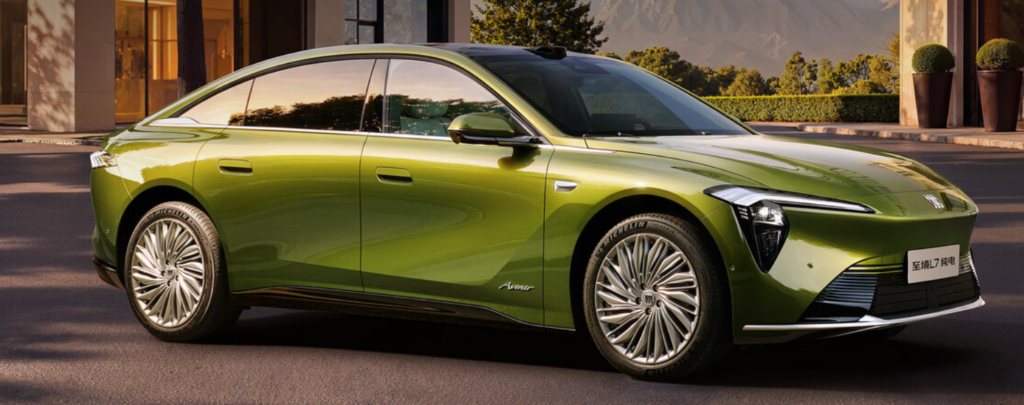
As new energy vehicle penetration continues to rise in the Chinese market, SAIC-GM Buick has announced that the first sedan under its premium new energy sub-brand “Electra” — the Electra L7 — has officially commenced deliveries. Developed entirely by the Chinese-led Pan Asia Technical Automotive Center (PATAC) design and engineering team, this mid-to-large sedan leverages a B-segment pricing strategy combined with premium comfort features, aiming to carve out a new niche in the highly competitive 200,000 RMB (approx. $27,600) new energy vehicle segment.
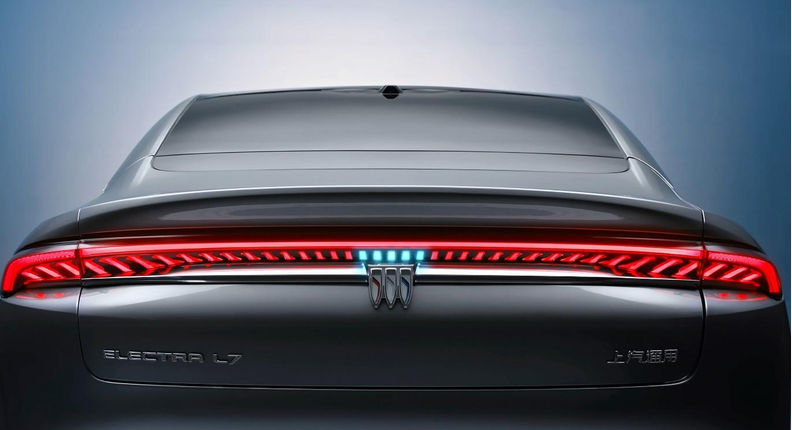
The Electra L7 adopts a closed-off front fascia and split-type “7-shaped” Galaxy headlamps, abandoning the traditional grille layout to further optimize aerodynamic drag coefficient. With a body length exceeding five meters and a wheelbase reaching the three-meter threshold, the sleek fastback profile and frameless doors accentuate the vehicle’s elongated proportions. The design language not only preserves Buick’s hallmark understated elegance but also incorporates flowing lines that resonate with Eastern aesthetics, giving the sedan a distinctive presence among a crowded field of new energy vehicles.
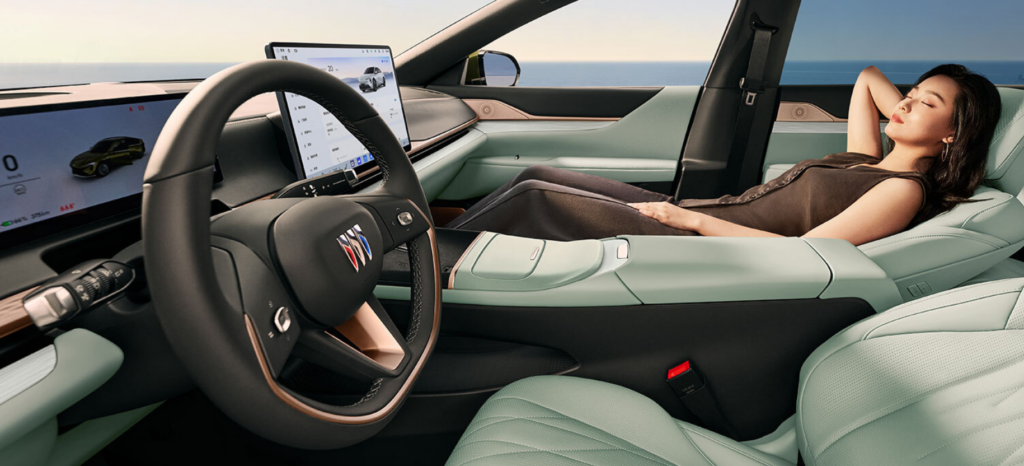
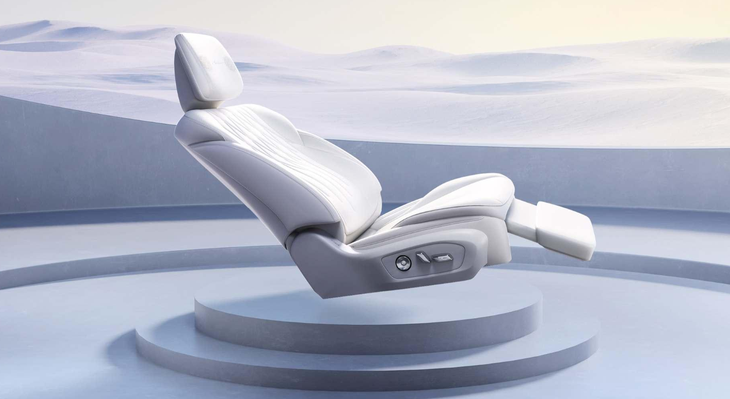
In terms of ride comfort — a priority for Chinese consumers — the Electra L7 aims to set a new benchmark. According to official specifications, the cabin is equipped with “Cloud-Floating Suspension Seats” featuring a 12-layer composite support structure, incorporating 3D spiral medical-grade pearl cotton and Surflex zero-pressure slow-rebound foam to deliver extended support and enveloping comfort. The chassis system employs front double-wishbone and rear five-link independent suspension, with the Avenir edition further equipped with a preview adaptive suspension that scans the road surface 500 times per second to actively adjust damper response, effectively filtering road irregularities. Complemented by 80 percent acoustic material coverage throughout the vehicle and 6-mm acoustic laminated glass, cabin noise isolation reaches class-leading levels.
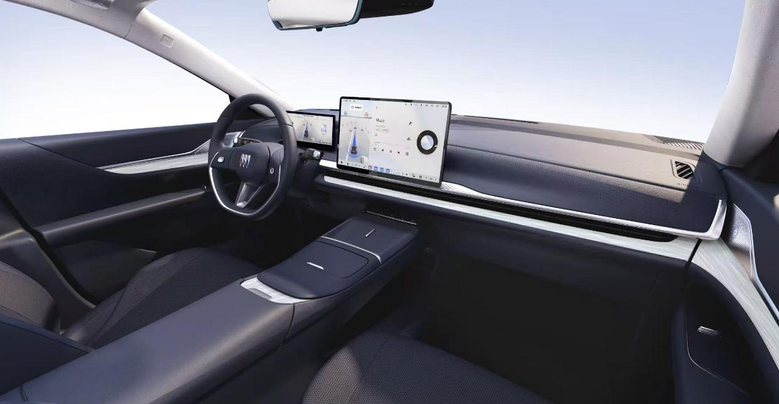
On the intelligent connectivity front, the Electra L7 debuts the Qualcomm SA8775P automotive-grade chip, whose AI computing power represents a multiple-fold increase over the current mainstream Snapdragon 8155 processor, ensuring smooth interaction across the 15.6-inch central touchscreen, 10.25-inch full-LCD instrument cluster, and 50-inch augmented reality head-up display. The infotainment system supports multi-screen synchronization and a rich array of connected ecosystem applications, further aligning with Chinese users’ preferences for smart cockpit experiences.
The powertrain represents one of the Electra L7’s core breakthroughs. The model is the first to feature the “Zhenlong” extended-range (EREV) system, comprising a 1.5T dedicated hybrid engine and an electric motor delivering maximum output of 252 kW (approximately 338 horsepower). Official test data indicates that acceleration performance differs by less than 0.1 seconds between full-charge and depleted-battery states, effectively addressing the common power attenuation issue that has plagued extended-range electric vehicles. Paired with a 40.2-kWh battery pack from the Ultium platform, the Electra L7 achieves a CLTC-rated all-electric range of 302 kilometers, while total combined range extends to 1,420 kilometers, covering both daily commuting and long-distance travel needs. The extended-range version also supports 130-kW DC fast charging, replenishing from 30 to 80 percent capacity in just 18 minutes. Meanwhile, the Electra L7 is simultaneously offered in a fully electric variant, which is built on an 800-volt high-voltage electrical architecture and delivers a CLTC range of 702 kilometers, recovering 450 kilometers of range in just 10 minutes of charging.
In the domain of advanced driver assistance, the Electra L7 deeply integrates local supplier technologies, featuring the “Xiaoyao Zhixing” assisted driving system and debuting the Momenta R6 Flying Wheel foundation model based on end-to-end reinforcement learning. The system is equipped with urban navigation-assisted pilot capabilities, capable of handling complex scenarios including close-cut merging, mixed traffic with non-motorized vehicles, and tidal lanes, while also supporting automated tollgate passage via ETC and one-touch valet parking functions.
On the market front, the Electra L7’s pricing strategy has drawn considerable attention. The model’s limited-time promotional starting price of 169,900 RMB translates to approximately $23,400, positioning it squarely within the mainstream price bracket of Chinese domestic brand new energy sedans. As a joint-venture manufacturer with deep manufacturing heritage, Buick is bringing to market a mid-to-large sedan with high-level intelligence and a dual powertrain offering (EREV and BEV) at a highly competitive price point, signaling the company’s strong commitment to deepening its presence in China’s new energy vehicle landscape.
发表回复