Mitsubishi Motors officially unveiled the fifth-generation Pajero at a global premiere held in Tokyo on September 2, 2026. This marks the first full model change for the nameplate in approximately five years, following the cessation of domestic production in Japan in 2019 and the discontinuation of the previous generation in 2021.
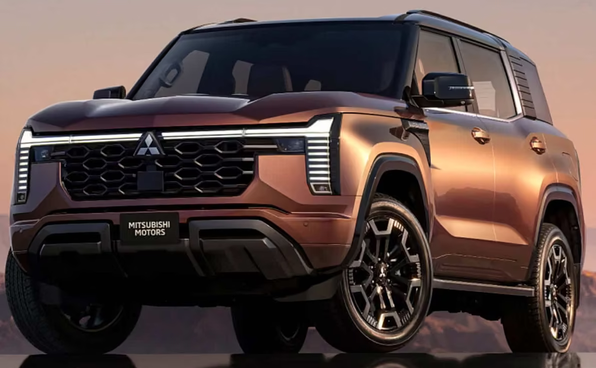
The new Pajero measures 4,920 mm in length, 1,925 mm in width, and 1,910 mm in height, with a wheelbase of 2,870 mm. Key off-road geometry figures include an approach angle of 30.4 degrees, a departure angle of 25.8 degrees, a ramp angle of 22.6 degrees, and a minimum ground clearance of 230 mm. The front-to-rear weight distribution is 52:48.
The most significant structural change on the fifth-generation Pajero is the adoption of a body-on-frame ladder chassis, shared with the Triton pickup truck. This marks the first time since the third-generation model that the Pajero has employed a non-load-bearing body structure. The suspension system consists of a double-wishbone front independent suspension and a five-link coil-spring rigid rear axle, replacing the previous generation’s four-wheel independent suspension. Mitsubishi Motors states that this revision is aimed at enhancing off-road capability while maintaining on-road ride comfort.
Under the hood, the new Pajero is powered by a 2.4-liter inline-four common-rail direct-injection clean diesel turbocharged engine, developed exclusively for the model. It produces a maximum output of 150 kW (204 PS) at 3,500 rpm and peak torque of 480 N·m between 1,750 and 2,500 rpm (with certain specifications rated at 470 N·m). The engine is mated to a newly developed eight-speed automatic transmission with a sport mode.
The four-wheel-drive system is the Super Select 4WD-II, which offers four selectable modes: 2H (high-speed rear-wheel drive), 4H (high-speed full-time all-wheel drive), 4HLc (high-speed four-wheel drive with center differential locked), and 4LLc (low-speed four-wheel drive with center differential locked). The vehicle is also equipped with the S-AWC (Super All-Wheel Control) integrated vehicle dynamics control system, which provides seven drive modes: Normal, Eco, Gravel, Snow, Mud, Sand, and Rock. Maximum braked towing capacity is rated at 3,500 kg.
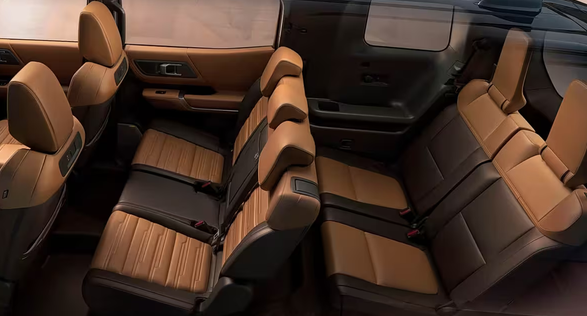
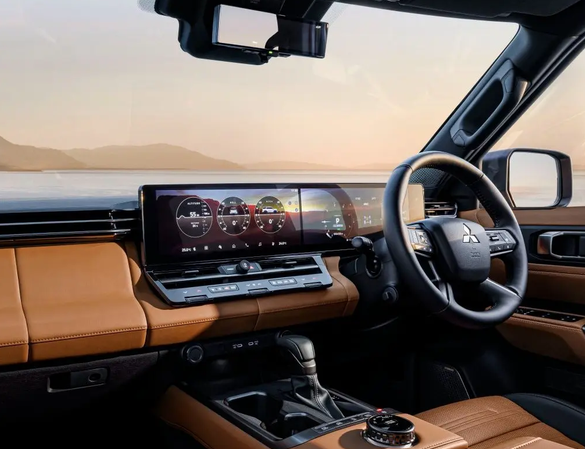
Inside, the fifth-generation Pajero features a three-row seven-seat layout (2+3+2). The second-row seats offer 150 mm of slide adjustment and a tip-up folding function, while the third-row seats can be fully stowed flat into the floor. The dashboard adopts a horizontally extended design and incorporates a dual 14.3-inch high-resolution display setup (with certain trims featuring 12.3-inch screens). The classic three-dial instrument cluster has been digitally reinterpreted and can display off-road telemetry including altitude, compass heading, pitch and roll angles, as well as AYC (Active Yaw Control) status. Interior upholstery and door panels feature stitched soft padding inspired by the traditional Japanese “Kumiko” woodworking technique. The premium audio system, developed jointly with Yamaha, is a 12-speaker Dynamic Sound Yamaha Ultimate system. Acoustic glass and enhanced sound insulation materials are used throughout the cabin.
In terms of safety and driver assistance, the new Pajero is equipped with the FCM (Forward Collision Mitigation) system, which includes pedestrian, cyclist, and motorcycle detection, as well as intersection assistance. Other features include PFCW (Predictive Forward Collision Warning), EAPM (Emergency Acceleration Pedal Misapplication Mitigation), ELA (Emergency Lane Assist), and FCTA (Front Cross Traffic Alert). The MI-PILOT single-lane highway driving assist system integrates adaptive cruise control with lane-keeping functionality. A total of eight airbags are fitted as standard, including a front-center airbag—a first for Mitsubishi vehicles. The 3D multi-view around-view monitor offers an under-floor perspective function for enhanced visibility.
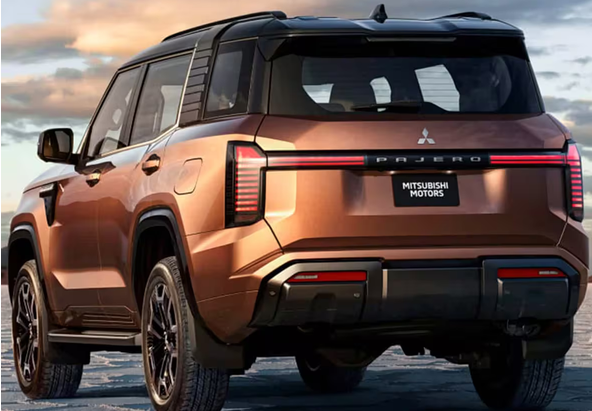
Exterior styling of the new Pajero adopts a horizontal, boxy profile that pays homage to the first-generation model. Two front grille designs are available—horizontal-bar and mesh—both inspired by Japanese kendo. The T-shaped headlamps and the C-pillar design, which echoes the roll bar of the original Pajero, are complemented by a hexagonal rear treatment that references the spare-tire carrier of previous generations, although the spare wheel is now mounted underneath the floor. The color palette includes two signature shades—”Armor Copper Metallic” and “Phantom Blue Metallic”—alongside approximately eight total options including White Diamond and Black Mica.
According to Mitsubishi Motors’ production and rollout plan, the fifth-generation Pajero will be manufactured at the Laem Chabang plant in Thailand. Sales are scheduled to commence in Japan, Thailand, and Australia in December 2026, with a subsequent phased introduction across approximately 100 global markets, including ASEAN nations, Central and South America, and the Middle East. Mitsubishi Motors has set a global production and sales target of 10,000 units for the 2026 fiscal year (ending March 31, 2027).
发表回复